Pollution of the Oder and adverse efects for the tourism and catering industries

The environmental catastrophe on the Oder has had a huge impact on the activities of entrepreneurs in the tourism industry, among others, who have now been deprived of the opportunity to earn money. These are mainly entrepreneurs who usually operate on a seasonal basis and need to earn a living for the rest of the year during the spring and summer period.

The Northern Chamber of Commerce in Szczecin is calling on the government to launch a fast-track support scheme for the entrepreneurs. In the Chamber’s opinion, companies dealing with sports, recreation and catering in the region are in the most difficult situation. These include kayak and sports equipment rentals, businesses offering leisure activities along the Oder River, and restaurants.

In the opinion of the Northern Chamber of Commerce in Szczecin, the shutdown should be linked to the right to compensation or exemption from rent or tax payments. Therefore, the Northern Chamber of Commerce in Szczecin urges the central and local authorities to provide support for entrepreneurs.

It should also be noted that if the situation justifying the ban persists, it will be necessary to consider the need of imposing the state of natural disaster. In such a case, entrepreneurs will be able to apply to the Province Governors for adequate compensation. In addition, the chances for entrepreneurs to obtain the compensation will be higher if it is proved that measures to prevent the disaster could have been taken sufficiently earlier so that the current ban would not have been needed.

Compensation for a delayed train – when is it due?


  1. CAUSE OF A PROBLEM

The main reason for the problem that has been affecting railway stations across Poland in recent times is the rise in fuel prices and the holiday season which means high interest in travel. Trains are currently overcrowded, passengers are complaining of a lack of air conditioning which, in the current climate crisis, makes travel as miserable as possible, and there are no tickets available for many journeys even days before the trip.

  1. DELAYED TRAIN – COMPENSATION UNDER THE EU REGULATION

It is important, first of all, to identify when a delay occurs, and this happens, when the train departs or arrives at its destination later than the scheduled time.

When faced with a problem with train travel, Regulation (EC) No 1371/2007 of the European Parliament and of the Council of October 23, 2007 on the rights and obligations of rail passengers will be useful. However, it should be remembered that the above regulation currently applies in Poland only to delays of domestic long-distance trains of the Express Intercity Premium (EIP), Express InterCity (EIC), InterCity (IC), Twoje Linie Kolejowe (TLK), interREGIO (IR) categories and international connections. Pursuant to the Regulation, the minimum amount of compensation is:

  • 25% of the single ticket price in the event of a delay of between 60 and 119 minutes,
  • 50% of the single ticket price in the event of a delay of 120 minutes or more.

The calculation of the period of delay shall not take into account any delay that the railway company can demonstrate as having occurred outside the territory in which the Treaty establishing the European Community is applied. In addition, please note that compensation for delays is paid when the value of the compensation in question per person exceeds the minimum threshold set by the carrier. The amount of this threshold may not exceed EUR 4.

In accordance with the Regulation in question, to the passenger not entitled the right to compensation if informed about the delay before purchasing the ticket or if the delay as a result of continuing the journey on another connection or changing the route is less than 60 minutes.

According to the Regulation, a passenger does not have a right to compensation if s/he is informed of a delay before purchasing a ticket or if the delay as a result of continuing the journey on another connection or changing the route is less than 60 minutes.

Compensation for train delays may take the form of a voucher entitling the passenger to a discount on the purchase of another ticket or, if the passenger expressly indicates this in the complaint, the payment of a specific amount

  • DELAYED TRAIN – COMPENSATION FOR PASSENGERS OF ALL TRAINS

Apart from the compensation resulting from the Regulation No. 1371/2007 of the European Parliament and of the Council of October 23, 2007 on the rights and obligations of passengers in rail traffic, the passenger of a delayed train has the right to claim compensation for repairing damage under the general provisions of the Civil Code (i.e. Article 363 §1 and 471 of the Civil Code) and the Transport Law. Pursuant to Art. 62 sec. 2 of the Act – Transport Law the carrier is responsible for the damage suffered by the traveller as a result of delayed arrival or cancellation of a regular means of transport. If we wish to pursue a claim under national legislation, it is necessary to prove the loss suffered, but it must be taken into account that in such a case, the carrier considers the case on a discretionary basis, i.e. it may reject, reduce or accept the claim in full. It should also be taken into account that the carrier may be released from liability if the delay of the train and the associated damage were caused by reasons entirely beyond its control, i.e. extraordinary events:

  • which the carrier had no influence on,
  • which, despite due diligence, the carrier could not foresee,
  • the consequences of which the carrier could not have prevented (e.g. overhead line rupture due to a storm, a member of the public being hit by a train, etc.).

However, extraordinary events do not include cases of self-inflicted rolling stock failure, not caused by external factors.

  1. HOW TO FILE A COMPLAINT TO PKP INTERCITY?

Compensation is paid at the passenger’s request. In such a request, it is necessary to indicate your details, write which connection the claim relates to, indicate what the train delay was and specify your request. The compensation is usually awarded in the form of a voucher as well, so if someone wishes to receive the compensation in cash, this should be explicitly stated in the application, together with the account number to which the carrier is supposed to make the transfer. The claim for compensation can also be sent by traditional means or submitted to a specially designated cash desk. On the other hand, cash registers handling complaints are not available at every railway station, but rather only at larger stations. Nonetheless, the fastest way to submit a request is electronically, either by sending it to the carrier’s email or by filling in a dedicated form on the carrier’s website.


Amendment to the Labour Code – delay in the implementation of EU directives

Significantly changing the rights and obligations of employers and employees as well as widely commented, planned amendments to the Act of June 26, 1974, the Labour Code, intended to implement EU directives (i.e. Directive of the European Parliament and of the Council (EU) 2019/1152 of June 20, 2019 on transparent and predictable working conditions in the European Union and Directive (EU) 2019/1158 of the European Parliament and of the Council of June 20, 2019 on work-life balance for parents and carers and repealing Council Directive 2010/18/EU), and whose implementation date by EU Member States was set on August 1, 2022 and August 2, 2022, respectively, did not enter into force into the Polish legal system in the above-mentioned dates.

Please be reminded – the planned changes concern in particular, but not exclusively:

  • increasing the annual number of days of leave by additional days of special leave, paid in half the daily rate or unpaid leave,
  • change to the conditions of concluding employment contracts for a probationary period,
  • changing the terms of termination of employment contracts by employers for a specified period with the notice period by introducing the obligation to justify the employer’s decision to terminate the employment relationship,
  • introducing a 9-week paternity leave,
  • a significant extension of the “Information on employment conditions” provided to the employee by the employer upon commencement of work,
  • the possibility of submitting applications for changing the type of work or working time by employees, which the employer will be obliged to recognize and take into account (if possible) under penalty of a fine.

According to media reports, the planned deadline for the implementation of the changes into Polish labour law is the beginning of 2023. However, given the significant differences between the European and national legal orders, as well as the pace of work to date and its current stage, according to some commentators, this deadline may be postponed again.

We will keep you updated on the progress of the legislation – please follow the news on our website.

Delayed or cancelled flight within the EU. When is compensation due?

CAUSE OF A PROBLEM

The COVID-19 pandemic remains the main cause of airport chaos. The airlines, in the midst of its cost-cutting efforts due to pandemic, were forced to lay off staff, the effects of which we see today. Staff shortages, as well as strikes and protests of air traffic controllers or airline crews, who demand better wages and working conditions, mean that flights are delayed or even cancelled.

DELAYED FLIGHT

It is important, first of all, to identify where there has been a delay, and this occurs when a flight departs or arrives at its destination later than the scheduled time.

Two legal acts will be useful in a situation where we encounter a problem with the flight:

  1. Act of November 24, 2017 on tourist events and related tourist services,
  2. Regulation (EC) No 261/2004 of the European Parliament and of the Council of February 11, 2004 establishing common rules on compensation and assistance to air passengers in the event of delay, cancellation or refusal of check-in for a flight; repealing Regulation (EEC) No 295/91 of 11 February 1991.

The Act  indicates that the traveller shall be entitled to compensation or redress for the damage or harm suffered as a result of non-compliance, and the tour operator shall promptly pay the compensation or redress. The regulation, in turn, indicates that airline passengers are entitled to financial compensation of €250/400/€600 from the airline for inconvenience caused as a result of delay, cancellation or denied boarding due to the airline selling more tickets than the number of available seats. It is important to remember that the aforementioned regulation applies to European Union airlines and allows compensation to be claimed for cancelled flights/sales of more tickets than the number of seats/delayed flights.

According to the discussed regulation, passengers have the right to apply for financial compensation from the airlines if they arrived more than 3 hours after the scheduled time.

The amount of compensation increases with the distance the aircraft has to travel:

  • EUR 250 up to 1,500 km
  • EUR 400 from 1,500 km to 3,500 km
  • EUR 600 over 3,500 km

CANCELLED FLIGHT

Pursuant to Regulation (EC) No 261/2004 of the European Parliament and of the Council of February 11, 2004, a flight is cancelled when a flight which was previously scheduled and on which at least one seat was booked has not taken place. Passengers are entitled to compensation for a cancelled flight if they have not been informed of the cancellation at least 14 days before the scheduled departure time. The situation changes when the air carrier is able to prove that the cancellation or long delay of a flight is caused by unavoidable factors which could not have been avoided despite all reasonable measures being taken, that is, circumstances beyond the air carrier’s effective control.

Compensation for a cancelled flight – When determining the distance, the basis is the last destination of the flight to which the passenger will arrive after the scheduled arrival time due to a delay caused by denied boarding or cancellation of the flight:

  • EUR 250 for all flights up to 1,500 kilometres;
  • EUR 400 for all intra-Community flights of more than 1,500 kilometres and all other flights between 1,500 and 3,500 kilometres;
  • EUR 600 for all flights not covered above

EMERGENCY SITUATIONS

Extraordinary circumstances may also cause delays or cancelled flights. These are situations where airlines are unable to control flight disruptions, even if the air carrier concerned takes reasonable steps to prevent it.

Extraordinary circumstances that do not always ensure compensation:

  • Strike – A strike is considered an exceptional circumstance that cannot be avoided, resulting in the inability to claim compensation. On the other hand, if a flight delay can be avoided and other airlines can fly during the strike, there is the possibility of compensation.
  • Acts of God– Volcanic eruptions, tsunamis, hurricanes and hail are considered “acts of God” and therefore no compensation can be claimed. Compensation can be claimed, if the airline could have avoided it in some way.
  • Technical problems – They are considered exceptional circumstances where the airlines could not have foreseen or avoided the technical problem. This is not an exceptional situation if it could have been avoided in a certain manner.

FLIGHT PROBLEMS AND HOLIDAY PACKAGES

It often happens that it is easier for people who are participants in a package travel to pursue their claims than for people who travel on their own. This is because the tour operator is responsible for the performance of the travel services covered by the package travel contract, regardless of whether the services are to be provided by the tour operator or by other travel service providers.

EC Regulation 261/2004 provides protection for tour packages, travel packages as well as holiday packages. This applies to all or those packages purchased in EU Member States, even though the journey is taking place outside the European Union. In accordance with the regulation in question, the tour operator is solely responsible for any breach of the terms of the contract. It also acts on behalf of the passenger and contacts the airline, as well as requests for compensation in case of an unfortunate event. The organiser should offer a full refund to the injured party within 7 days in cash, cheque or electronic bank transfer. It is also possible to get a ticket for an alternative flight to your destination.


Revolutionary changes for online shops

By 28 May 2022, the European Union member states have been obliged to implement in their national legislation, the Directive (EU) 2019/2161 of the European Parliament and of the Council of 27 November 2019 amending Council Directive 93/13/EEC and Directives 98/6/EC, 2005/29/EC and 2011/83/EU of the European Parliament and of the Council as regards the better enforcement and modernisation of Union consumer protection rules (OJ UE L 328 of 18.12.2019, p.  7), the so-called “Omnibus” Directive.

The purpose of the Omnibus Directive is to strengthen the effectiveness of existing consumer legislation and to modernise and improve certain consumer protection measures.

Here are some important changes which are introduced by the Omnibus Directive which will affect you if you are in the e-commerce industry:

  • where users of a website are allowed to comment on, review goods or services purchased by consumers – it will be necessary to provide information on how to verify the authenticity of reviews; removing and hiding negative reviews and discouraging their posting, as well as publishing or procuring the publication of fake reviews will constitute an infringement,
  • where products are marketed in more than one EU country – it will be necessary to ensure that the good (product) marketed in each country is identical, i.e. does not differ materially, e.g. in composition. A breach of this provision will be considered as misleading customers and an unfair market practice,
  • when adjusting the price to the consumer on the basis of collected data on the consumer’s preferences and behaviour (so-called profiling) – it will be necessary to inform the consumer of the individual price adjustment based on the information collected,
  • in the case of informing about a reduction in the price for goods or services – it will be necessary to provide, in addition to information about the reduced price, information about the lowest price for that goods or services that was in force in the 30-day period before the reduction was introduced,
  • for products which have been on sale for less than 30 days – it will be necessary to display the lowest price for that product in the period from the day the product was offered for sale until the reduction was introduced.

In addition to the Omnibus Directive, the EU member states have also been obliged to implement in their national laws the provisions of Directive (EU) 2019/771 of the European Parliament and of the Council of 20 May 2019 on certain aspects concerning contracts for the sale of goods, amending Regulation (EU) 2017/2394 and Directive 2009/22/EC, and repealing Directive 1999/44/EC, i.e. the so-called “Goods Directive” and the Directive (EU) 2019/770 of the European Parliament and of the Council of 20 May 2019 on certain aspects concerning contracts for the supply of digital content and digital services, i.e. the so-called  “Digital Directive”.

The provisions of the Goods and Digital Directives implement changes in, among other things, the regulation of the statutory warranty, i.e. the seller’s liability for the conformity of the supplied goods with the contract. The statutory warranty for consumers and entrepreneurs with consumers rights will be completely transferred from the Civil Code to the Consumer Rights Act. As for more significant changes, the Goods Directive abandons the concept of defect in goods and introduces a definition of conformity of goods with the contract. The provisions of the online sales terms and conditions will have to be updated in this respect.

The bill implementing the Omnibus Directive was referred on 12.07.2022 to the Legislative Office of the Chancellery of the Polish Parliament (Sejm) for its opinion, while the bill implementing the Goods and Digital Directive was referred on 6.07.2022 to consultations (to the Ombudsman for Small and Medium-Sized Enterprises – RMiŚP).

At this point, the provisions of the directives have not been implemented into the Polish legislation, also their actual application is postponed until the above-mentioned laws enter into force. Entrepreneurs, therefore, still have time to adapt their business to the upcoming regulatory changes.

Consumer warranty – changes to the consumer rights act to be implemented in 2022.

The upcoming changes are related to the implementation of Directive (EU) 2019/770 of the European Parliament and of the Council of 20 May 2019 on certain aspects concerning contracts for the supply of digital content and digital services (OJ UE L 136 of 22.05.2019, page  1 and OJ UE L 305 of 26.11.2019, page  60; the “Digital Directive”) and Directive (EU) 2019/771 of the European Parliament and of the Council of 20 May 2019 on certain aspects concerning contracts for the sale of goods amending Regulation (EU) 2017/2394 and Directive 2009/22/EC and repealing Directive 1999/44/EC (OJ UE L 136 of 22.05.2019, page 28 and OJ UE L 305 of 26.11.2019, page 63; the “Goods Directive”).

The main objective of both directives is to contribute to the proper functioning of the internal market, as well as to ensure a high level of consumer protection and harmonisation of regulations across the EU countries.

At present, we are only discussing a bill (i.e. a bill amending the Consumer Rights Act and certain other laws), and therefore it should be borne in mind that the final form of the legislation may still be different. However, it should already be noted that in 2022, significant changes to consumer rights legislation are to be expected, which are to be implemented by the European Union countries in their laws.

Key changes

An important change in the drafted bill is the introduction of a new type of statutory warranty, i.e. a consumer warranty, and the incorporation of its provisions in the Consumer Rights Act, and not in the Civil Code, as it was the case so far.

Consumer warranty will be based on the concept of goods’ non-conformity with the contract and not on the concept of a physical or legal defect of the goods, as it was the case in the Civil Code. Also, the conditions for the goods’ conformity with the contract under the bill will be described in more detail than at present, which is expected to avoid some of the disputes concerning the scope of obligations imposed on entrepreneurs.

Primarily new is the introduction of a hierarchy of consumer protection measures.

The consumer will first have the right to demand that the goods are restored to conformity with the contract, either by repair or replacement. Only afterwards, if the repair or replacement turns out to be, for example, uneconomical, the consumer will be able to exercise further rights, i.e. demand a price reduction or withdraw from the contract.

Similarly to now, the consumer will not be able to withdraw from the contract if the non-conformity of the goods with the contract is insignificant. However, the bill introduces a presumption in favour of the consumer that the non-conformity of the goods with the contract is substantial.

Amendments to the Code of Commercial Companies – compulsory buyout and changes to taking the minutes of management board’s resolutions

This article discusses further important changes introduced by the amendment of the Code of Commercial Companies (hereinafter: the “CCC”). They mainly concern compulsory buyout and changes to taking minutes of the management board’s resolutions.

COMPULSORY SQUEEZE OUT

The amendment of the CCC stipulates that a subsidiary may request its parent company to buy out the shares or stocks of minority shareholders (representing not more than 10% of the share capital), if the parent company holds directly at least 90% of the subsidiary’s share capital. The buyout will be made at a price determined by an expert appointed by the general meeting or shareholders’ meeting. The share buyout provisions apply to both the joint-stock company and the limited liability company.

The agreement or articles of association of a subsidiary may additionally provide that the parent company is entitled to buy out shares, if it directly or indirectly holds less than 90% of the share capital, but not less than 75%.

CHANGES TO THE MINUTES OF MANAGEMENT BOARD’S RESOLUTIONS

According to the amendment, the minutes of the management board’s resolutions should contain the agenda of the meeting, the names of the management board members participating in voting and the number of votes cast for each resolution. The minutes shall also indicate the dissenting opinion submitted by a board member together with any reasoning for it. The minutes shall be signed by at least the member of the board chairing the meeting or conducting the voting, unless the articles of association or the regulations of the management board provide otherwise.

In addition, the act introduces a number of other changes, such as regulating the content of the invitation to supervisory board meetings, the competences of the supervisory board in a joint-stock company and extending the list of criminal regulations and offences for which a final and binding conviction renders a person ineligible to perform particular functions.

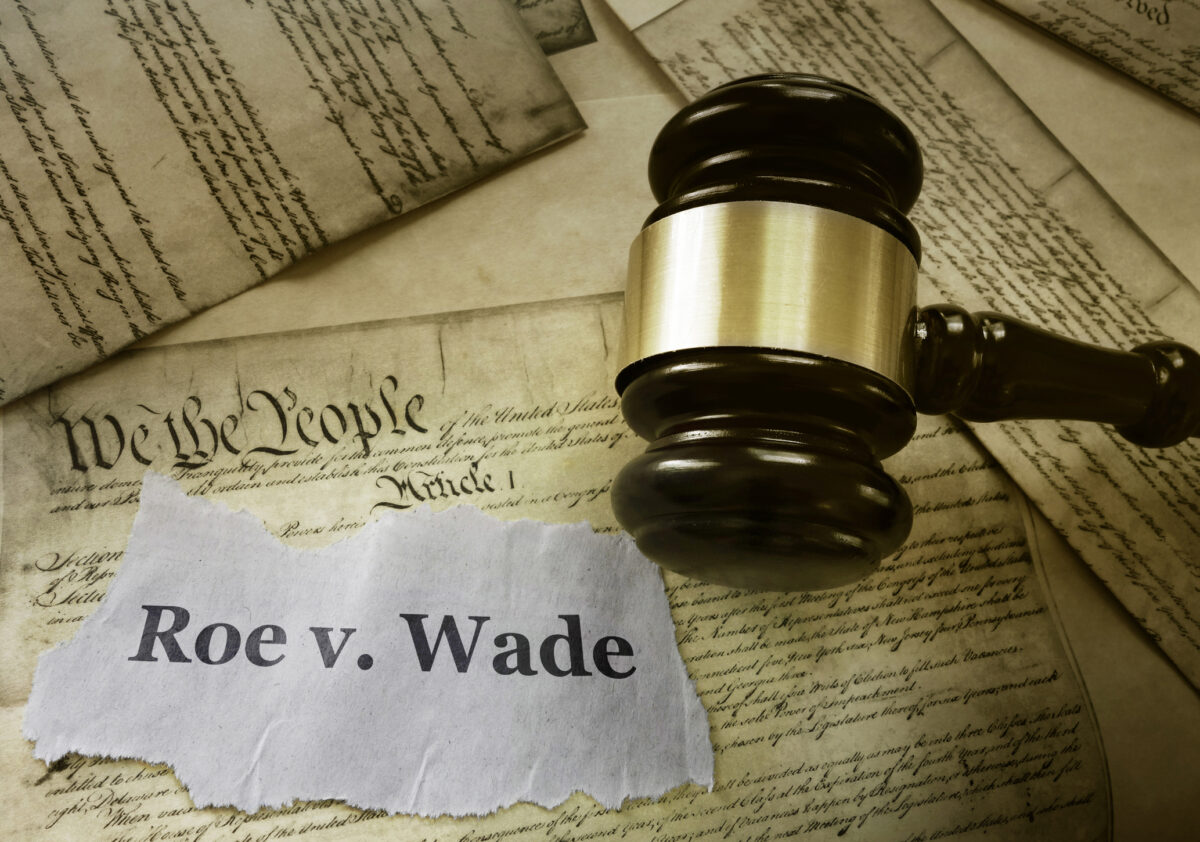
USA – The end of the constitutional right to abortion

After nearly 50 years, on Friday 24 June, the conservative-dominated US Supreme Court abrogated the Roe vs. Wade ruling guaranteeing women’s right to terminate pregnancies – the verdict was passed by a vote of six to three. The US Supreme Court has considered that this ruling was a mistake, as the US Constitution does not contain any provision on the right to abortion. As a consequence of this action, each state will be able to independently introduce restrictions or bans on the legality of abortion.

The current situation in the USA originates from the Roe vs. Wade ruling of 1973.
This judgment concerned 21-year-old Norma McCorvey, who was pregnant for the third time.  In Dallas, Texas, the woman’s friends advised her to lie that she had been raped in order to qualify for a legal abortion because, according to their erroneous assumption, the law in Texas allowed abortions in cases of rape and incest. The truth, however, was different, because Texas law only permitted legal abortions in cases where the mother’s life was in danger. Consequently, Norma McCorvey was refused a legal abortion and tried to get one illegally on her own. Due to the fact that the illegal abortion facility was closed by the police, the woman contacted lawyers.
The woman’s case was heard by the US Supreme Court in the early 1970s, which made abortion legal in the USA throughout the whole pregnancy period, provided that the states were allowed to introduce regulations restricting the possibility of abortion in the second and third trimester. The court pointed out that every woman has the right to an abortion as it derives from the rights to privacy and liberty guaranteed by the 14th Amendment to the US Constitution.

Both while the validity of the Roe vs. Wade ruling was being considered and after it was abrogated, the people of the United States were demonstrating.

President Joe Biden, in his speech from the White House on 24 June, stated that the ruling was a threat to the health of many women. The American president noted that, in his view, the 1973 ruling was correct in terms of constitutional law and the application of the fundamental right to privacy and liberty. Biden blamed former president Donald Trump for the Supreme Court’s decision, saying that the “core” for today’s decision “to eliminate a fundamental right of women” in the US was “three judges nominated by one president, Donald Trump”. As a result, state laws banning abortion automatically go into effect today, he continued. The president also announced that he would do everything possible to protect women’s rights and that his administration would use every means legally possible to protect women as they travel between states seeking their right to abortion.

Currently, after the Supreme Court’s verdict, abortion is already banned in the following states:

  • Alabama
  • Arkansas
  • Kentucky
  • Louisiana
  • Missouri
  • Oklahoma
  • South Dakota
  • Utah
  • Wisconsin
  • Ohio

In the following states abortion will be banned or restricted in the upcoming days, weeks and months

  • Idaho
  • Mississippi
  • North Dakota
  • Tennessee
  • Texas
  • West Virginia
  • Wyoming
  • Arizona
  • Florida
  • Georgia
  • South Carolina

In the following states, abortion is legal or is expected to continue to be legal:

  • Alaska
  • Colorado
  • Illinois
  • Maine
  • Massachusetts
  • Minnesota
  • Nevada
  • New Hampshire
  • New Mexico
  • Rhode Island
  • California
  • Connecticut
  • D.C.
  • Delaware
  • Hawaii
  • Maryland
  • New Jersey
  • New York
  • Oregon
  • Vermont
  • Washington

While in the following states the law remains unclear:

  • Indiana
  • Iowa
  • Kansas
  • Michigan
  • Montana
  • Nebraska
  • North
  • Carolina
  • Pennsylvania
  • Virginia

Draft act amending the act – Labour Code and some other acts

In connection with the implementation of the provisions of Directive (EU) 2019/1158 of the European Parliament and of the Council of 20 June 2019 on work-life balance for parents and carers and repealing Council Directive 2010/18/EU, some changes will be introduced in terms of entitlements related to the exercise of parental and caring roles by employees, while guaranteeing protection against unequal treatment in employment. The deadline for implementing the Directive expires on 2 August 2022.

The Directive establishes minimum standards aimed at achieving equality between women and men in terms of entry into employment and treatment in the workplace, as well as facilitating the work-life balance for working parents and carers.

The most relevant upcoming changes are summarised below in this article, including:

  • the introduction of an individual right to parental leave for female and male employees.

The total length of this leave for both parents will be:

  • up to 41 weeks (in the case of single birth),
  • or up to 43 weeks (in the case of multiple births);
  • the introduction of care leave of up to 5 days per calendar year to provide personal care or support to a relative or person living in the common household who requires major care or support on serious medical grounds;
  • providing every employee with the right to time off work due to force majeure, as well as in urgent family matters caused by illness or accident, if the employee’s urgent presence is required;
  • flexible work arrangements – another solution to increase the employee’s entitlements to adapt their work arrangements to their individual needs. Flexible work arrangements will be available to parents caring for a child up to the age of 8, as well as carers. In addition, rejection of a request for flexible working arrangements will require the employer to provide written justification;

Furthermore:

  • the introduction of employee protection against any unfavourable treatment by the employer or negative consequences towards the employee due to their exercise of rights under the Labour Code. The protection will also apply to an employee who has provided any form of support to an employee exercising their rights under the Labour Code;
  • moreover, the introduction of a ban on any preparations for the dismissal of employees during pregnancy and the period of maternity leave, as well as from the date of an employee’s application for: a part of maternity leave, leave on maternity leave conditions or a part thereof, paternity leave or a part thereof, parental leave or a part thereof and care leave or a part thereof as well as taking of such leave, and also due to the application for flexible work arrangement until the date of ending the work under the flexible work arrangement;
  • the introduction of sanctions for breaches of the national law introduced in connection with the implementation of the Directive,
  • the entitlements for the Government Plenipotentiary for Equal Treatment and the Ombudsman to take action in respect of any discrimination cases arising under the implemented Directive.

The regulation introducing the ‘Pregnancy Register’ has been signed by the Minister of Health and will enter into force later in 2022.

The regulation introducing the ‘Pregnancy Register’ has been signed by the Minister of Health and will enter into force later in 2022.

The creation of the draft regulation on the detailed scope of data on medical events to be processed in the information system and the manner and time limits for transferring such data to the Medical Information System is controversial, primarily in connection with the Constitutional Tribunal’s ruling restricting the right to abortion, in which the tribunal stated that the provision allowing abortion in case of a high probability of a severe and irreversible fetal defect was unconstitutional.

As a result, there are doubts as to whether the state aims to increase the health protection, or its control over the society.

The regulation specifies the range of data collected by medical personnel (which is to be expanded to include, among other things, information on allergies, blood group and pregnancy) and defines the principles of transferring it.

What does the introduction of the pregnancy register mean?

As a result of the introduction of the electronic pregnancy register, the healthcare providers will transfer:

  • information on confirmed blood group results, if the healthcare provider obtains it in connection with the provision of a healthcare service or carrying out an essential medical procedure,
  • information on medical devices, allergies and pregnancy, if the healthcare provider obtains it in connection with the provision of a healthcare service or carrying out an essential medical procedure.

Who has access to the register?

The expansion of the range of collected data is to translate to better availability of the information transferred to the Medical Information System, which will improve doctors’ work, facilitate the circulation of medical records and reduce the costs of accessing them.

As the Ministry assures, only selected medical personnel will have access to the information stored in the system, and in any other situation, in order to read information concerning a given person, the data subject’s consent will be required. In addition, the Ministry of Health explains that the power of the courts or the prosecutor’s offices to demand access to the information contained in the MIS cannot be exercised arbitrarily, but only in accordance with the applicable law, thus only under pending proceedings.

However, it is impossible not to notice that the Pregnancy Register will increase interference with the private lives of patients. Therefore, the register may be abused. It should be noted that according to the Code of Criminal Procedure, judges and prosecutors, for example, have access to medical records. What is more, if information about the patient’s pregnancy is stored in the MIS, an easier access to the information will be obtained and it will be possible to use this data on a large scale.

It should also be stressed that due to the collection of pregnancy data, patients may be less prone to use medical assistance and plan pregnancy.